

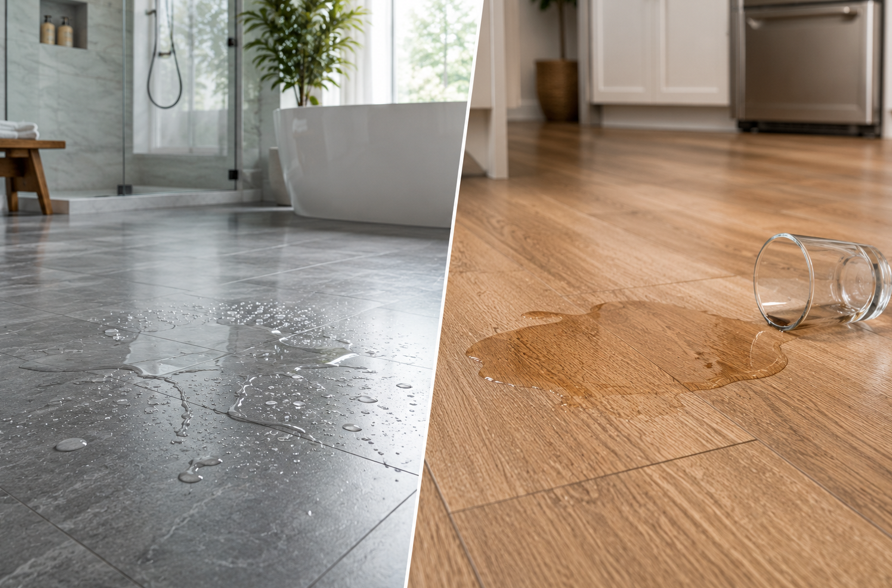
Water has always been one of the biggest concerns homeowners face when selecting new flooring. Whether it's a spilled drink in the kitchen, muddy shoes near the entryway, pet accidents, or moisture in a laundry room, everyday life creates situations where flooring needs to handle more than just foot traffic.
As homeowners begin researching flooring options, they often encounter terms like "waterproof flooring" and "water-resistant flooring." At first glance, these terms may sound nearly identical. However, they represent two different levels of protection that can significantly impact long-term performance.
Understanding the difference is especially important for homeowners in Commerce Charter Township, West Bloomfield, Farmington Hills, Novi, and Walled Lake who want flooring that fits their lifestyle, maintenance expectations, and household needs.
At Michigan Carpet and Flooring Inc., homeowners frequently ask whether waterproof flooring is worth the investment or whether water-resistant flooring provides sufficient protection. The answer depends on how the space is used and the level of moisture exposure the floor is likely to experience.
Why Underst
anding Moisture Protection Matters
Not all moisture-related situations are the same.
A small spill that is cleaned immediately creates a very different challenge than standing water that remains on the floor for several hours.
Before comparing flooring products, it's important to understand why moisture protection matters.
Everyday Household Spills
Most homes experience occasional accidents, including:
Spilled drinks
Pet water bowls tipping over
Cooking splashes
Wet shoes
Children's messes
These situations happen frequently and can affect flooring performance over time.
Long-Term Moisture Exposure
Certain areas of the home naturally experience more moisture than others.
Examples include:
Kitchens
Bathrooms
Laundry rooms
Mudrooms
Entryways
Choosing the right level of moisture protection can help homeowners avoid costly repairs and premature flooring replacement.
Protecting Your Investment
Flooring is a major investment.
Understanding how products respond to moisture helps homeowners make more informed decisions and maximize long-term value.
What Is Water-Resistant Flooring?
Water-resistant flooring is designed to slow down moisture penetration and provide temporary protection against spills.
The key word is temporary.
How Water-Resistant Flooring Works
Water-resistant products are engineered to resist moisture for a limited period.
When spills occur, homeowners typically have time to clean them before damage develops.
This protection often comes from:
Protective surface coatings
Enhanced wear layers
Improved construction methods
Moisture-resistant materials
What Water-Resistant Flooring Does Well
Water-resistant flooring performs well in situations involving:
Minor spills
Everyday household accidents
Light moisture exposure
Routine cleaning
Many homeowners find this level of protection sufficient for certain areas of the home.
What Water-Resistant Flooring Cannot Do
Water-resistant flooring is not designed to withstand prolonged standing water.
If moisture remains on the surface too long, it may eventually penetrate vulnerable areas and affect the flooring structure.
This limitation is important to understand when evaluating product options.
What Is Waterproof Flooring?
Waterproof flooring provides a higher level of moisture protection.
These products are specifically engineered to prevent water from penetrating the flooring system under normal household conditions.
How Waterproof Flooring Works
Manufacturers achieve waterproof performance through several technologies.
Common features include:
Waterproof core materials
Advanced locking systems
Sealed seams
Protective wear layers
Moisture-resistant construction
Together, these components create a floor designed to withstand more demanding moisture conditions.
What Waterproof Flooring Does Well
Waterproof flooring is designed to handle:
Spills
Pet accidents
Wet shoes
Kitchen splashes
Moisture-prone environments
Many products can tolerate standing water significantly longer than water-resistant alternatives.
Why Homeowners Like Waterproof Flooring
The biggest benefit is peace of mind.
Homeowners often appreciate knowing their flooring can better handle the unexpected challenges of everyday life.
Waterproof vs. Water-Resistant: The Key Differences
While both categories provide moisture protection, there are several important distinctions.
Level of Protection
Water-resistant flooring offers temporary protection.
Waterproof flooring offers more comprehensive moisture defense.
Response to Standing Water
Water-resistant products generally require prompt cleanup.
Waterproof products provide greater flexibility if cleanup is delayed.
Ideal Installation Locations
Water-resistant flooring often performs well in:
Bedrooms
Living rooms
Home offices
Dining rooms
Waterproof flooring is often preferred in:
Kitchens
Bathrooms
Laundry rooms
Mudrooms
Entryways
Long-Term Confidence
Many homeowners choose waterproof flooring because it offers additional protection in areas where moisture exposure is more likely.
Common Flooring Types That Offer Water Resistance
Several flooring categories provide water-resistant performance.
Traditional Laminate Flooring
Many laminate products offer improved moisture resistance compared to earlier generations.
They can perform well in areas with limited moisture exposure.
Certain Hardwood Products
Some engineered hardwood products include moisture-resistant features that provide additional protection.
Select Carpet Options
Certain carpet systems incorporate moisture-resistant backing technologies.
These products can help manage occasional accidents more effectively.
Best Applications
Water-resistant products often work well in rooms where spills are infrequent and moisture exposure remains relatively low.
Common Flooring Types That Offer Waterproof Protection
Waterproof flooring options have expanded dramatically in recent years.
Luxury Vinyl Plank (LVP)
Luxury vinyl plank remains one of the most popular waterproof flooring choices available today.
Benefits include:
Realistic wood visuals
Strong durability
Moisture protection
Easy maintenance
Luxury Vinyl Tile (LVT)
LVT offers similar waterproof performance while replicating stone and tile appearances.
Waterproof Laminate
Newer waterproof laminate products combine laminate aesthetics with enhanced moisture protection.
Waterproof Composite Flooring
Some innovative flooring systems use advanced core technologies specifically engineered for moisture-prone environments.
These products continue gaining popularity among homeowners seeking both performance and style.
Which Rooms Benefit Most From Waterproof Flooring?
Not every room requires the highest level of moisture protection.
However, certain areas naturally benefit from waterproof performance.
Kitchens
Kitchens experience frequent spills, splashes, and cleaning activities.
Waterproof flooring helps manage these challenges.
Laundry Rooms
Laundry equipment introduces potential moisture risks.
Waterproof flooring can provide additional confidence in these spaces.
Mudrooms
Michigan weather often means wet boots, snow, rain, and outdoor debris.
Waterproof flooring performs well under these conditions.
Entryways
High levels of moisture and dirt often enter through exterior doors.
Waterproof products can handle these environments more effectively.
Bathrooms
Bathrooms represent one of the most moisture-prone areas in any home.
Waterproof flooring is often an ideal solution.
Which Rooms Can Benefit From Water-Resistant Flooring?
Water-resistant products remain excellent choices for many parts of the home.
Living Rooms
Most living rooms experience limited moisture exposure.
Water-resistant flooring often performs very well.
Bedrooms
Bedrooms generally present minimal moisture challenges.
Home Offices
Water-resistant products often provide more than enough protection for office environments.
Dining Rooms
Occasional spills may occur, but standing water is typically uncommon.
In these situations, water-resistant flooring can provide a practical balance between performance and value.
Common Misconceptions About Waterproof Flooring
Several misconceptions frequently create confusion during the buying process.
Myth: Waterproof Means Indestructible
No flooring is completely immune to every possible situation.
Proper maintenance and prompt cleanup remain important.
Myth: Water-Resistant and Waterproof Mean the Same Thing
These terms describe different levels of performance.
Understanding the distinction helps prevent unrealistic expectations.
Myth: Waterproof Flooring Looks Artificial
Modern manufacturing technology has dramatically improved realism.
Many waterproof products closely resemble hardwood, stone, and tile.
Myth: Waterproof Flooring Is Only for Bathrooms
Today's waterproof flooring products work beautifully throughout the home.
Many homeowners install them in kitchens, family rooms, and open-concept spaces.
How to Choose the Right Option for Your Home
The best flooring choice depends on your household's needs.
Consider Your Lifestyle
Do you have:
Children?
Pets?
Frequent guests?
Busy schedules?
More activity often increases the value of additional moisture protection.
Evaluate Moisture Exposure
Think about how each room is used on a daily basis.
Different spaces face different challenges.
Consider Long-Term Goals
Some homeowners prioritize maximum protection and peace of mind.
Others focus on balancing performance with budget considerations.
Compare Product Options Carefully
When evaluating flooring choices, exploring various waterproof flooring products can help homeowners better understand the differences in construction, durability, appearance, and moisture protection.
Choosing Flooring That Fits Your Lifestyle
Both waterproof and water-resistant flooring offer valuable benefits. The key is understanding which level of protection aligns with your home's needs.
Water-resistant flooring can provide excellent performance in many areas where moisture exposure is limited. Waterproof flooring delivers enhanced protection for spaces where spills, moisture, and daily activity create greater challenges.
By understanding the differences between these two categories, homeowners can make more confident flooring decisions and select products that provide long-term satisfaction.
If you're comparing flooring options and want expert guidance, contact our team today. Michigan Carpet and Flooring Inc. can help you explore flooring solutions that fit your home, lifestyle, and budget.


