

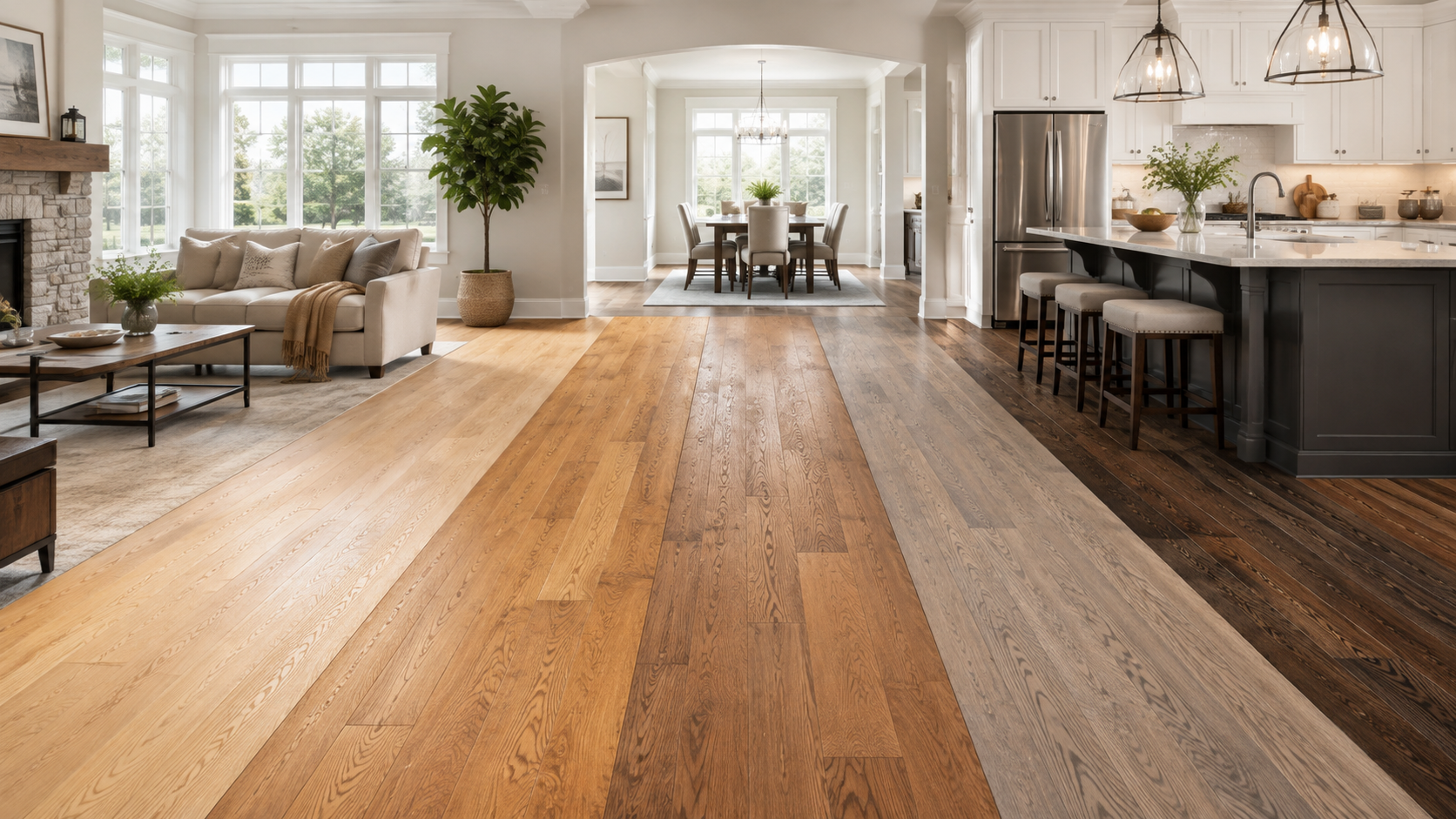
Choosing a hardwood floor color sounds simple until you start comparing samples. One board looks warm and natural in the showroom, another feels perfect beside your cabinets, and a third seems brighter once you bring it home. Then the daylight changes, the lamps come on, and every shade looks a little different.
That is why color deserves as much attention as wood species, plank size, and finish. Hardwood covers a large visual area, so its tone can influence how open, cozy, polished, or dramatic an entire room feels. It also has to work with features you may not be changing, such as kitchen cabinets, fireplaces, trim, countertops, and built-ins.
For Farmington Hills homeowners, 2026 is bringing a welcome shift toward warmer, more natural-looking wood. Industry coverage from this year shows midtone woods taking a leading role, with blonde options still present and cooler grays giving way to shades with warmer brown undertones.
At Michigan Carpet and Flooring Inc., we help homeowners compare flooring with the bigger picture in mind. With more than 30 years of flooring industry experience, our team understands that a beautiful floor is not only about following a trend. It is about choosing a color that fits your home, your lifestyle, and the way you want your space to feel for years to come.
Here are the hardwood color directions worth knowing in 2026, along with practical ways to decide which one belongs in your home.
Warm Natural Oak Leads the 2026 Look
Natural oak has staying power because it sits in a comfortable middle ground. It is lighter than many traditional brown stains, but it still has enough warmth and visible grain to give a room character. In 2026, the most current versions lean toward wheat, light honey, oatmeal, and soft beige rather than icy or heavily bleached finishes.
Houzz's 2026 flooring coverage describes warmth as a major direction across new wood collections, with midtones dominating and natural-looking engineered hardwood appearing prominently at this year's major flooring introductions.
Why Natural Oak Is So Easy to Live With
A warm natural oak floor can work across a wide range of decorating styles. It feels at home in a traditional living room, a transitional kitchen, a streamlined contemporary space, or an interior built around natural materials.
It also gives you flexibility. If you repaint the walls, swap a sofa, or update your dining furniture later, a balanced natural wood tone is less likely to fight with the new palette.
Warm natural oak can be especially effective when you want to:
Keep a room feeling bright without making it look stark.
Show off the character and grain of the wood.
Add warmth without a strong orange or red cast.
Connect open living, dining, and kitchen areas visually.
Create a neutral foundation for changing furniture and decor.
What to Pair With It
Warm oak works particularly well with creamy whites, soft beige, muted greens, warm stone, black accents, and natural textiles. It can also complement painted cabinetry in shades such as off-white, navy, olive, or soft gray.
The important part is undertone. If your cabinets are very yellow, for example, placing another yellow-toned wood directly beside them can create more warmth than you intended. A quieter natural oak with beige or neutral-brown undertones may give the room better balance.
Soft Blonde and Sandy Hardwood Keeps Rooms Feeling Light
Light hardwood is not disappearing in 2026. Instead, the look is becoming softer and more natural. Think pale oak, wheat, sand, light beige, and creamy wood tones rather than frosty whitewashed floors.
This color family works well for homeowners who love an airy interior but still want their flooring to feel unmistakably like wood.
Why Lighter Hardwood Remains Appealing
A light floor can visually open a room because it reflects more available light than a very dark surface. That can be useful in smaller rooms, hallways, or spaces where windows are limited.
It also creates an easy backdrop for stronger colors elsewhere. Deep green upholstery, navy cabinetry, black fixtures, clay accents, and darker woods can all stand out nicely against a pale floor.
Another benefit is its relaxed appearance. Dust, crumbs, and minor surface debris may be less noticeable on some light, naturally varied floors than on very dark, uniform finishes.
Keep the Tone Warm, Not Washed Out
There is a difference between a warm blonde hardwood and a pale floor with a cold cast. In 2026, the stronger direction is toward light colors that still preserve warmth and texture.
Look for tones that feel sandy, creamy, or softly golden. Visible grain and natural variation can keep a light floor from feeling flat.
This is also where sampling matters. A pale board that looks neutral under showroom lighting may show more yellow, beige, or pink once it is beside your walls and cabinets. In a Farmington Hills home, it is worth looking at the sample during bright daytime light and again in the evening under your normal fixtures.
Honey, Caramel, and Warm Mid-Tone Browns Bring Back Richness
If very pale flooring feels too light and deep brown feels too formal, the middle of the spectrum may be the sweet spot.
Warm mid-tone woods are one of the clearest design directions for 2026. Houzz reports a broader return to medium wood tones, while current flooring introductions show honey, brown, and other warmer shades gaining attention across wood and wood-look collections.
Honey and Caramel Without the Orange Cast
Today's honey and caramel tones are generally more restrained than the strongly orange finishes many homeowners remember from past decades. The goal is warmth, not a heavy amber effect.
These colors can bring out the grain beautifully and make a room feel welcoming without reducing the sense of space.
They pair especially well with:
Cream and warm white walls
Olive, sage, and muted green
Navy or deep blue
Natural stone and warm quartz
Leather and woven textiles
Matte black or aged-metal accents
Why Medium Brown Is Such a Practical Choice
Medium brown hardwood offers a balance that is hard to beat. It has enough depth to anchor a room, but it does not create the same visual weight as a very dark floor.
It can also transition comfortably between styles. A chestnut or soft coffee-brown floor may suit a classic home today and still work if the room is updated with cleaner, more contemporary furniture later.
Homeowners comparing these tones can explore our selection of hardwood flooring to see how wood species, grain, stain, and finish change the final effect.
One detail worth watching is red undertone. Some species and stains naturally pull warmer or redder than others. If you have brick, cherry-toned cabinetry, or reddish furniture nearby, compare everything together before making your final choice.
Rich Walnut and Deep Brown Add Drama Without Feeling Heavy
Dark hardwood still has a place in 2026, especially for homeowners who want a room to feel grounded, elegant, and substantial. The difference is that current darker looks tend to celebrate visible wood character rather than covering it with an almost-black stain.
Warm walnut, espresso-brown, deep chestnut, and other earthy dark tones can create beautiful contrast against lighter walls and furniture.
Rooms Where Deeper Tones Work Especially Well
Dark hardwood can be a strong choice in:
Formal dining rooms
Home offices
Larger living rooms
Bedrooms with light walls and textiles
Rooms with generous natural light
Traditional or updated-classic interiors
A deeper floor can visually anchor pale furnishings and make architectural details feel more intentional. It also works well when you want the floor itself to become a stronger design feature rather than simply fading into the background.
Think About Everyday Visibility
There is a practical tradeoff. Depending on the finish, darker floors can make light-colored pet hair, dust, and small surface marks easier to notice.
That does not rule them out for active households. It simply makes texture, sheen, and natural variation more important. A matte or low-sheen finish with visible grain may be more forgiving than a very smooth, high-gloss dark floor.
If you love the sophistication of walnut but want easier day-to-day upkeep, consider moving one or two shades lighter into a rich medium brown. You can keep the warmth and depth while reducing the contrast with everyday dust and debris.
Warm Greige and Muted Taupe Replace Cold Gray
Gray flooring had a long run, but the 2026 version of neutral hardwood looks noticeably warmer.
Current flooring coverage shows cooler grays losing ground while gray-influenced colors with brown undertones remain relevant. Houzz also identifies warm earthy colors, including taupe and brown, as part of the broader 2026 interior palette.
That does not mean every gray-toned floor suddenly looks dated. It means homeowners who still like a neutral, understated appearance have warmer options that tend to blend more naturally with today's interiors.
What Is the Difference Between Gray, Greige, and Taupe?
A cool gray floor often has silver, blue, or icy undertones. Greige blends gray with beige, while taupe usually brings more brown or earthy warmth into the mix.
That small undertone shift can make a big visual difference.
Warm greige or taupe hardwood may be worth considering if you:
Like contemporary or transitional interiors.
Want a neutral floor without obvious golden tones.
Need to connect warm and cool finishes within the same room.
Prefer understated flooring that lets cabinetry, art, or furniture lead the design.
The safest way to judge these colors is beside the permanent surfaces already in the room. Place the sample against cabinets, countertops, fireplace materials, and wall paint. A floor described as “neutral” can read surprisingly warm or cool once another finish is sitting next to it.
How to Choose the Right Hardwood Color for Your Farmington Hills Home
A trend can help you narrow the field, but it cannot make the decision for you. The best hardwood color is the one that looks right in your actual room and supports the way your household lives.
Start With Natural Light
Light changes wood.
A sunny room can bring out golden or red undertones that seemed subtle in a sample. A north-facing or lower-light room may make the same board look cooler or deeper.
That is why it helps to view flooring at several points during the day. A sample that looks great at noon may feel different in the evening when your lamps are on. Michigan's changing seasons can alter the character of a room too, so choosing a balanced tone can help the floor feel comfortable year-round.
Compare the Floor With Permanent Finishes
Before focusing on furniture and accessories, look at the parts of the room that are likely to stay.
These may include:
Kitchen cabinets
Countertops
Fireplace stone or brick
Built-in shelving
Stair treads and railings
Existing wood trim
Large architectural features
Your floor does not have to match another wood exactly. In fact, deliberate contrast often looks more polished than two wood tones that are almost, but not quite, the same.
For example, medium walnut furniture can stand out beautifully against lighter natural oak. What matters is that the undertones feel compatible.
Look Beyond the Color Name
Manufacturers use creative names for flooring colors, but names are not a reliable way to predict what a floor will look like in your home.
Focus on what you can actually see. Does the sample lean yellow, red, brown, gray, or beige? Is the grain high contrast or subtle? Does the finish reflect a lot of light?
Two colors both called “natural oak” can look quite different when they come from different collections.
Think About Your Household
Color also affects how visible everyday wear and debris can be.
If you have pets, children, or busy entrances, a medium shade with natural color variation may be appealing because it does not create extreme contrast with every speck of dust or small mark.
If your priority is a dramatic, polished room and you do not mind more frequent visible upkeep, a deeper floor may be exactly what you want.
There is no universal winner. The right choice depends on what you value most.
Bring the Decision Into the Room
Small online photos cannot fully show the grain, texture, sheen, and undertones of hardwood. Physical samples give you much more useful information.
Michigan Carpet and Flooring Inc. has an extensive showroom in Commerce Charter Twp, and our shop-at-home service can bring samples to your door. Seeing flooring beside your existing finishes can make it much easier to tell whether a warm oak, medium brown, blonde, walnut, or greige tone belongs in the space.
Choose a Hardwood Color You Will Still Love After 2026
The strongest hardwood color story of 2026 is warmth. Natural oak, sandy blonde, honey, caramel, medium brown, walnut, and earthy neutral tones all reflect a move toward floors that feel inviting and connected to the character of real wood.
That does not mean every Farmington Hills home needs the same look. A light oak floor may make one interior feel fresh and open, while a medium chestnut could give another room the depth it has been missing. A rich walnut may be ideal for a bright formal space, while warm greige can suit a homeowner who prefers a quieter neutral.
The useful question is not simply, “What color is popular?” It is, “Which popular direction works with my home?”
Consider the room's light, permanent finishes, furniture, household activity, and the feeling you want to create. Then compare full-size samples whenever possible. That approach gives you a better chance of choosing a floor that looks current now without feeling tied to a short-lived trend.
With more than 30 years of flooring industry experience, Michigan Carpet and Flooring Inc. helps Farmington Hills homeowners make those comparisons with knowledgeable, personalized guidance. If you are ready to explore colors and find a hardwood floor that suits your space, get in touch with our team.


