

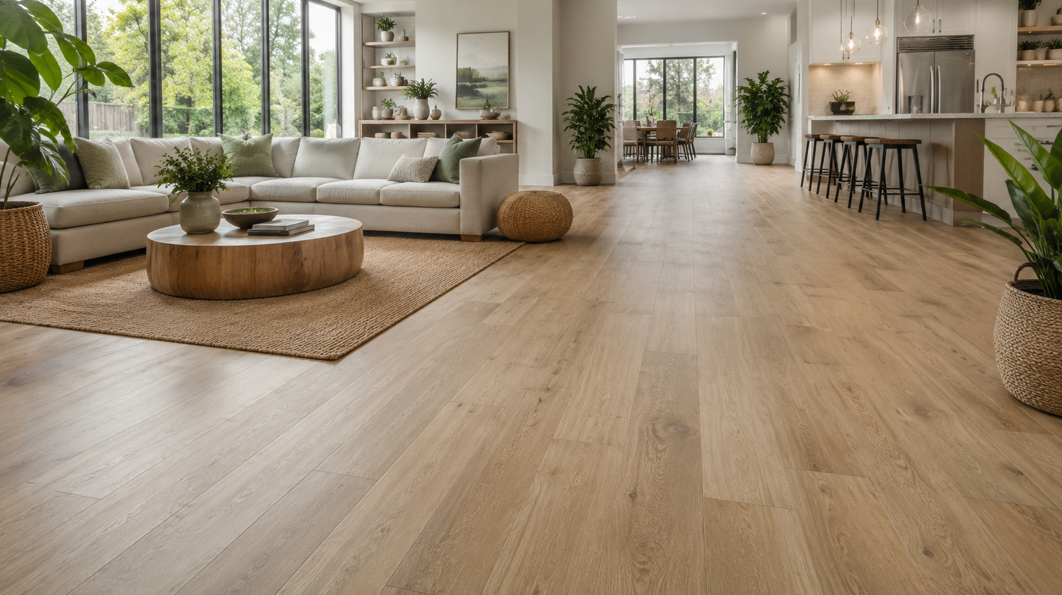
Choosing new flooring is about more than finding a color you like. For many West Bloomfield homeowners, it is also a chance to make a thoughtful decision about indoor air quality, material use, long-term durability, and the waste created during a home improvement project.
That does not mean every product labeled “green” is automatically the right choice. Eco-friendly flooring is rarely defined by one feature. A responsible choice usually combines durable construction, transparent product information, lower emissions, sensible maintenance, and a design that can stay in your home for years.
At Michigan Carpet and Flooring Inc., homeowners can compare flooring styles with practical guidance from a family-owned local business with more than 30 years of industry experience. The goal is not to chase a label. It is to choose a floor that looks beautiful, performs well, and fits the way your household lives.
West Bloomfield homes face their own flooring challenges. Snowy boots, wet entryways, road salt, pets, children, seasonal humidity, and busy family rooms all affect how long a floor lasts. A product that looks sustainable on paper but wears out too quickly may create more waste in the long run.
So, what makes laminate flooring a more environmentally responsible option? The answer starts with the materials, but it also includes emissions, durability, installation, maintenance, and product documentation.
What Makes Laminate Flooring More Eco-Friendly?
Laminate flooring is built in layers. Most products include a protective wear layer, a printed design layer, a wood-fiber core, and a backing layer that supports stability. This construction creates realistic wood looks while using less solid hardwood than a traditional wood plank.
That alone does not make a laminate floor eco-friendly. The strongest products support their environmental claims with clear information.
Responsible Wood Sourcing
The core is often made from compressed wood fiber. Some manufacturers use wood byproducts or recovered material that might otherwise go to waste. Others provide details about responsible forestry programs or chain-of-custody standards.
Ask where the wood-based material comes from and whether the manufacturer provides product-specific documentation. A broad company sustainability statement is not the same as proof for the exact collection you are considering.
Recycled Content and Recyclability
A laminate product may contain recycled or recovered wood fiber. That can reduce demand for newly harvested material and make better use of manufacturing byproducts.
Two terms are often confused:
Recycled content describes material used to manufacture the floor.
Recyclable describes whether the finished floor can be processed after removal.
A product can contain recycled content without being easy to recycle at the end of its life. Local options may also be limited when flooring contains mixed materials, coatings, or attached backing.
Look for specific percentages and written manufacturer information rather than vague claims.
Transparent Environmental Claims
Useful product information may include:
Environmental Product Declarations
Sustainability reports
Responsible sourcing statements
Indoor emission certifications
Technical data sheets
Recycling or take-back policies
You do not need to understand every technical line. These documents matter because they make products easier to compare.
Words such as “natural,” “earth-friendly,” and “eco-conscious” can sound reassuring but may not explain much. A useful claim identifies a percentage of recycled content, a verified emission standard, responsibly sourced material, or published environmental documentation.
In simple terms, eco-friendly laminate flooring usually combines responsible materials, verified lower emissions, durable construction, and transparent manufacturing information.
Indoor Air Quality Matters
Flooring covers a large surface area, so it makes sense to consider how a product may affect the air inside your home.
Some building materials release volatile organic compounds, often called VOCs. These compounds can come from flooring components, adhesives, finishes, underlayment, and subfloor preparation products.
The goal is not to assume that every laminate floor creates a concern. Instead, look for independent testing and clear documentation.
Look for Third-Party Testing
Some laminate collections carry certifications related to indoor chemical emissions. Depending on the product, you may see GREENGUARD, GREENGUARD Gold, FloorScore, or another recognized standard.
A certification is useful only when it applies to the exact product. Before purchasing, ask:
Which certification applies to this collection?
Is the certification current?
Can I review the product documentation?
Does the core meet applicable composite wood requirements?
Are the recommended installation materials also low-emitting?
Avoid assuming that every collection from the same brand has identical testing.
Think About the Whole Installation
The finished floor may include underlayment, moisture barriers, patching compounds, trims, and adhesives.
Many laminate floors use floating click-lock installation, which may reduce or eliminate the need for full-spread adhesive. Even so, the correct method depends on the product and room.
Ask your flooring professional to explain the complete installation system. A beautiful floor works best when every component is compatible and approved by the manufacturer.
Good ventilation, proper curing time, careful cleanup, and following acclimation instructions can also support a more comfortable installation.
Durability Is Part of Sustainability
A floor that performs well for many years can reduce the material use, transportation, labor, and disposal connected with early replacement. That makes durability one of the most practical parts of sustainable flooring.
The right floor is not simply the toughest product available. It is the product that matches the room, household, and expected level of use.
Match the Product to the Space
Consider:
Daily foot traffic
Pets and children
Rolling office chairs
Furniture movement
Sun exposure
Snow and grit near entrances
Possible spills
Cleaning habits
Below-grade conditions
A guest bedroom has different needs from a busy hallway. A home office with a rolling chair has different demands from a formal dining room.
Choosing the right performance level from the start helps the flooring remain attractive longer.
Compare Wear and Moisture Performance
Laminate wear layers help protect the printed design from scratches, scuffs, and daily use. Manufacturers may use wear ratings or product classifications to indicate where a collection is intended to perform.
Compare those ratings with the room’s activity level, warranty coverage, scratch claims, cleaning requirements, and approved applications.
Moisture wording can be confusing. Standard laminate, water-resistant laminate, and waterproof-labeled products may have different warranties and installation requirements.
Review:
Spill protection time
Approved rooms
Required edge or perimeter sealing
Cleaning restrictions
Plumbing leak exclusions
Whether coverage applies only to topical moisture
Water-resistant does not automatically mean suitable for every kitchen, bathroom, mudroom, or basement.
Choose a Style With Staying Power
A floor that still feels attractive years from now is less likely to be replaced simply because the look has dated.
Natural wood tones, realistic grain patterns, and versatile finishes can work across changing paint colors, furniture, and decor. The best choice is a style you genuinely enjoy rather than a trend you may quickly outgrow.
Choosing Laminate for West Bloomfield Homes
West Bloomfield homeowners deal with winter moisture, road salt, wet footwear, seasonal temperature changes, pets, active households, and a mix of older and newer home designs.
A good choice starts with the room.
Homeowners can explore available laminate flooring styles while comparing durability, moisture protection, indoor emission information, and design details.
Entryways and Mudrooms
Entry areas often receive the hardest treatment. Snow, rain, grit, and salt can collect near doors and become abrasive underfoot.
Confirm that the product is approved for the space, review its moisture protection, use suitable mats, remove grit regularly, and wipe up melted snow promptly. Avoid mats that trap moisture beneath them.
Living Rooms and Family Rooms
Laminate can be a practical fit for shared living spaces because it offers a wood-inspired appearance, consistent color, and easy routine care.
For a busy family room, focus on scratch resistance, stain performance, comfortable underlayment, noise control, fade resistance, and residential warranty coverage.
Open-plan homes may also benefit from a coordinated floor that visually connects living, dining, and hallway areas.
Bedrooms and Home Offices
Bedrooms typically see less moisture and lower traffic, which may allow for a broader range of products.
In a home office, consider rolling chairs and furniture pressure. A protective chair mat may help, but it needs to be approved for use over the flooring.
Underlayment can also affect sound and comfort. Ask whether the product includes attached backing or requires a separate layer.
Kitchens and Basements
Laminate can offer a warm wood look in a kitchen, but product selection needs extra care. Look for a collection specifically approved for kitchen use and review spill protection, seam treatments, cleaning restrictions, and warranty exclusions.
Quick cleanup matters. Even a product with enhanced moisture protection may not cover long-term leaks or standing water.
Basements require a close look at concrete moisture, past water entry, humidity control, subfloor flatness, and vapor protection. Some products are approved for below-grade installation, while others are not.
Homes With Pets and Children
Families often want flooring that is easy to clean, comfortable, and durable enough for daily activity.
Useful features may include scratch-resistant wear layers, stain resistance, textured finishes for traction, low-emission documentation, and realistic patterns that help disguise minor marks.
No floor is completely scratch-proof. Keeping pet nails trimmed, using protective pads, and removing grit can make a noticeable difference.
An Eco-Friendly Laminate Buying Checklist
When several products look similar, a clear checklist makes the decision easier.
Ask About Material Sourcing
Request information about the wood-fiber core, recovered material, recycled content, and responsible forestry practices. Specific documentation carries more weight than broad environmental language.
Check Emission Information
Look for independent testing tied to the exact collection. Ask whether documentation is available for the flooring and recommended underlayment or adhesives.
Compare Durability With Daily Life
Be realistic about how the room will be used. Pets, children, furniture, rolling chairs, direct sunlight, and wet entry traffic all influence the best choice.
Read the Warranty Details
Do not stop at the number of years printed on the display card.
Review approved rooms, wear coverage, moisture exclusions, pet-related exclusions, cleaning requirements, installation conditions, and transferability.
The fine print explains what the manufacturer expects from the product and installation.
Consider Installation Waste
Accurate measurement can reduce unnecessary cartons and rushed reorders. A well-planned layout may also limit avoidable cuts.
Ask how much extra material is recommended. The amount can vary based on layout, plank direction, room shape, and pattern.
Keeping a small quantity of matching material may help with a future repair.
Review Underlayment and Care
Ask whether the product includes attached backing or requires separate underlayment. Compare compatibility, recycled content, indoor emission information, sound performance, and moisture-barrier requirements.
Confirm the approved cleaning method before installation. A practical routine may include removing grit, cleaning spills quickly, using recommended products, avoiding excessive water, placing pads beneath furniture, and following humidity guidance.
Compare Total Value
The lowest initial price is not always the best long-term value. Compare expected lifespan, warranty protection, installation needs, care requirements, and suitability for the room.
A floor that costs slightly more but performs better in your household may reduce the chance of early replacement.
The best eco-conscious laminate choice is a verified, lower-emission, durable product that fits the room and can be maintained for many years.
Installation Choices Can Reduce Waste
Even a carefully selected product can underperform if the subfloor, moisture conditions, or installation method are not right.
Start With Accurate Measurement
In-home measurement helps determine how much flooring is needed and identifies room features that may affect the layout.
Accurate planning can reduce excess material, shortages, ordering mistakes, unnecessary delivery trips, and avoidable cuts. It also helps identify transitions, stairs, closets, doorways, and adjoining rooms before work begins.
Prepare the Subfloor
Laminate needs a clean, dry, stable, and appropriately level surface. Uneven areas can create movement, noise, or pressure on the locking system.
Preparation may include repair, patching, cleaning, moisture testing, or removing unsuitable material. A properly prepared foundation supports the life of the finished floor.
Plan the Layout and Disposal
Discuss plank direction, transition locations, expansion spacing, door clearance, floor vents, appliances, and furniture movement before installation.
If existing flooring needs to be removed, ask what happens to it. Recycling or donation options depend on the material, condition, adhesives, and local facilities.
Laminate recycling may not be widely available in every area. It is better to ask for realistic local options than assume the material will be recycled.
Keep Your Laminate Looking Beautiful Longer
Good care protects the floor and supports a longer useful life.
Place suitable mats near exterior doors and remove grit regularly. During a Michigan winter, wipe up melted snow and salty residue promptly. Avoid leaving wet boots directly on the floor.
Use a cleaner approved for laminate flooring. Avoid abrasive pads, harsh chemicals, waxes, and excessive water unless the manufacturer specifically permits them.
Place protective pads beneath furniture and use approved mats where rolling chairs or repeated movement may wear the surface. Area rugs can add comfort, but confirm that the backing will not trap moisture or discolor the finish.
Respond to leaks, damaged planks, loose transitions, or repeated moisture issues early. Keep product details, receipts, warranty documents, and leftover material in a safe place for future maintenance or repairs.
Make a Thoughtful Flooring Choice for Your Home
Eco-friendly laminate flooring is not about finding one perfect label. It is about making a series of responsible decisions.
Look for transparent materials, verified lower-emission information, durable construction, realistic moisture protection, and a style you will enjoy for years. Match the product to the room, follow installation requirements, and use a care routine that supports long-term performance.
Michigan Carpet and Flooring Inc. offers a professionally designed showroom in Commerce Charter Township, along with shop-at-home appointments, design consultation, in-home measurement, flooring installation, subfloor repair, estimates, and financing options. The knowledgeable team can help West Bloomfield homeowners compare products without losing sight of comfort, quality, appearance, and lasting value.
To discuss laminate options, request an estimate, or arrange a shop-at-home appointment, get in touch with the Michigan Carpet and Flooring Inc. team.


