

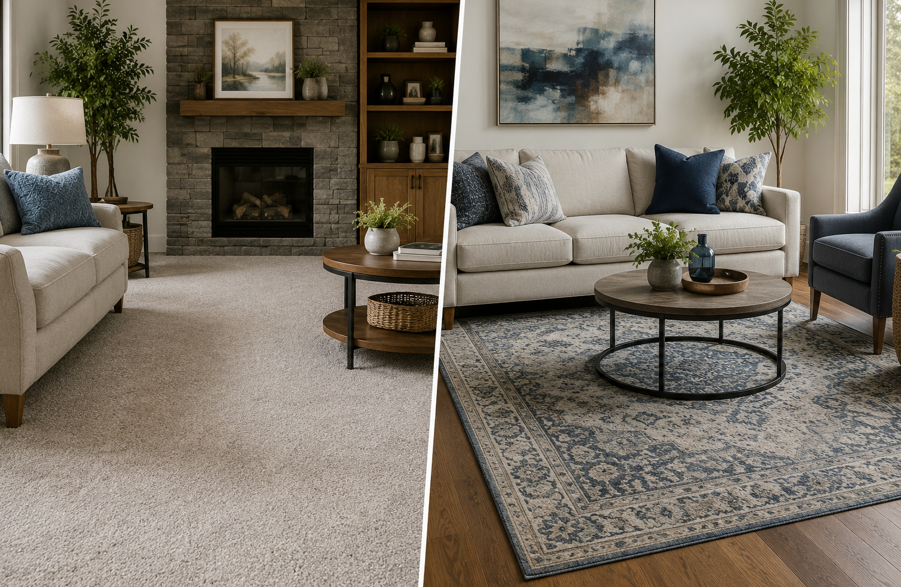
Choosing between wall-to-wall carpet and area rugs can shape how a room looks, feels, and functions. Both add softness and warmth, but they solve different design and lifestyle needs.
For Walled Lake homeowners, the decision often comes down to more than appearance. Michigan winters can make hard floors feel cold, busy households need practical surfaces, and open rooms may benefit from better sound control. Pets, children, furniture placement, allergies, and maintenance also matter.
Michigan Carpet and Flooring Inc. helps local homeowners compare flooring choices based on comfort, durability, style, and how each room is used. Carpet covers the entire floor and creates a consistent cushioned surface. Area rugs cover selected parts of an existing floor and can be moved or replaced as the room changes.
One may be the clear winner for your space, or the best plan may involve both.
The Basic Difference Between Carpet and Area Rugs
Wall-to-wall carpet is installed across the full floor, usually over padding. It is fitted to the room and becomes part of the space until it is removed or replaced.
An area rug is placed over a finished floor such as hardwood, laminate, luxury vinyl, or tile. It may sit beneath a seating group, dining table, or bed. Rugs come in standard and custom sizes, and many can move from room to room.
Carpet creates softness from wall to wall. Every step feels cushioned, and the room gains a unified look.
Area rugs add softness only where it is needed. The surrounding floor remains visible, giving homeowners more flexibility with color, pattern, and layout.
Carpet may make sense when comfort, warmth, and noise reduction are top priorities. Rugs may be better when you want to protect part of a hard floor or update a room without changing the entire surface.
Comfort and Warmth Underfoot
Walled Lake winters make underfoot comfort important. Hard surfaces can feel cool during colder months, especially in bedrooms and family rooms.
How Carpet Feels
Wall-to-wall carpet offers continuous cushioning. There are no exposed cold sections between the bed and closet or between the sofa and hallway. Padding adds another layer of comfort.
Carpet is often a strong choice for:
Bedrooms
Family rooms
Playrooms
Media rooms
Upstairs hallways
The fiber, pile height, density, and pad all affect the feel. Plush carpet can feel luxurious, while a lower-profile construction may provide easier movement in active spaces.
How Area Rugs Feel
An area rug provides targeted comfort. A large rug beneath a sofa and chairs can soften the seating zone while leaving the surrounding floor visible. A bedside rug can create a warm landing spot without covering the entire bedroom.
A quality rug pad can add cushioning, help the rug stay in place, and reduce premature wear.
The Comfort Winner
Carpet provides the most consistent warmth and softness. Rugs offer useful comfort where needed without changing the feel of the full room.
Sound Control in Busy Homes
Hard surfaces can reflect footsteps, voices, television audio, and activity from children or pets. Rooms with high ceilings or open layouts may feel especially lively.
Carpet for Quieter Rooms
Wall-to-wall carpet absorbs sound across the full floor. Padding can further reduce footfall noise and help limit sound transfer between levels.
This can be valuable in second-floor bedrooms, home offices, nurseries, playrooms, media spaces, and hallways.
Rugs for Targeted Sound Absorption
Area rugs can soften echoes in a room with hardwood, tile, or another hard surface. A large rug beneath the main furniture group may noticeably improve the room’s acoustics.
Uncovered parts of the floor will still reflect noise, and a small rug may make little difference in a large room.
The Sound-Control Winner
Carpet generally delivers stronger and more consistent noise reduction. Rugs can help when they are large and paired with a quality pad.
Style and Design Flexibility
Carpet and rugs create different design opportunities.
A Unified Look With Carpet
Carpet gives a room a continuous visual foundation. It can make oddly shaped spaces feel more cohesive and help distinguish bedrooms from hard-surface living areas.
Homeowners can choose neutral tones, textured loops, soft cut piles, patterns, multicolor blends, and performance fibers for active homes.
A neutral carpet can support changing wall colors, bedding, furniture, and accessories for years. Patterned carpet can add personality to a staircase, office, or formal room.
More Frequent Changes With Rugs
Area rugs offer greater decorating flexibility. A rug can introduce color, texture, pattern, or contrast without committing the whole room to one look.
Rugs are useful when you want to define a seating or dining zone, highlight an existing floor, rearrange furniture, or update decor more often.
The Style Winner
Rugs offer more flexibility because they can be repositioned or replaced. Carpet offers a cleaner, more integrated look across the full room.
Cleaning and Everyday Maintenance
No floor covering is maintenance-free. The easier option depends on the household and the room.
Maintaining Carpet
Carpet benefits from regular vacuuming, prompt spot cleaning, and periodic professional cleaning. Entry mats can reduce tracked-in grit, especially during snowy weather.
Fiber type and stain protection matter. Pet households may prefer products designed for easier cleanup and stronger stain resistance.
Maintaining Area Rugs
Rugs also need vacuuming and spot cleaning. Smaller rugs may be easier to move, while larger or delicate rugs may require professional care.
The floor beneath the rug needs attention too. Lift or move the rug occasionally to remove dust, check for moisture, and inspect the pad.
The Maintenance Winner
Small washable rugs can be easier to manage in limited areas. For large living spaces, maintenance depends more on material quality and care habits.
Cost and Long-Term Value
A small rug may cost less than carpeting a full room, but a large, high-quality rug can represent a significant investment.
What Affects Carpet Cost?
The total cost of carpet may include material, padding, measurement, subfloor preparation, installation, removal of existing flooring, and work around stairs or unusual room shapes.
Homeowners exploring carpet flooring can compare fiber types, textures, colors, stain resistance, and performance levels based on each room.
What Affects Rug Cost?
Rug pricing varies based on size, fiber, construction, design, and whether it is machine-made, hand-tufted, or hand-knotted. A custom rug or bound carpet remnant may also be sized for a specific space.
A suitable rug pad can improve comfort, protect the floor below, reduce slipping, and help the rug wear evenly.
Which Offers Better Value?
Carpet may provide better value when you want full coverage, consistent comfort, and sound control. Rugs may provide better value when the existing floor is in good condition and you only need softness in selected areas.
The better investment is the option that solves the room’s needs without creating unnecessary replacement or maintenance.
Safety, Mobility, and Daily Use
Flooring choices can affect how comfortably people move through a room.
Carpet and Fall Protection
Properly installed carpet creates a continuous surface that does not shift during normal use. It can provide more traction than a smooth hard floor and may soften the impact of a fall.
Pile height matters. Very thick carpet can be harder for some mobility devices, while a lower-profile construction may support easier movement.
Rugs and Trip Hazards
Rugs can slide, curl, or bunch if they are not correctly sized and secured. A quality pad and careful placement can reduce these concerns.
Avoid small loose rugs in busy walkways or near stairs. Make sure corners lie flat and doors can open without catching the edge.
The Safety Winner
Properly installed carpet usually provides the most consistent surface. Rugs can be safe when they are correctly sized, supported, and positioned.
Carpet or Rugs for Children and Pets?
Families often want softness, durability, stain resistance, and easy cleanup.
Carpet in Family Spaces
Carpet can make playrooms and family rooms more comfortable for crawling, sitting, reading, and playing. It also reduces the sound of toys, footsteps, and active pets.
Look for stain-resistant fibers, durable construction, low-emission product information, suitable padding, and warranty terms that match household use.
Rugs in Family Spaces
Rugs can define a play zone or protect part of a hard floor. They can also be replaced more easily as tastes or room needs change.
However, a small rug may shift during active play, and pet claws can catch on some looped or loosely woven textures.
The Family-Friendly Winner
Carpet is often better for full-room softness and noise control. Rugs work well when you want a designated soft area while keeping the surrounding hard floor exposed.
Allergies and Indoor Air Considerations
People sometimes assume that hard flooring with a rug is always better for allergies than carpet. The reality depends on product choice, cleaning habits, ventilation, and individual sensitivities.
Carpet can hold particles until they are removed through vacuuming, while hard floors may allow dust to move through the room. Rugs can also collect dust, pet hair, and pollen.
For either option:
Vacuum regularly with suitable equipment
Clean spills promptly
Follow professional cleaning recommendations
Use entry mats to reduce tracked-in debris
Maintain heating and cooling filters
Review product-specific emission certifications
Homeowners with significant allergy or respiratory concerns may want advice from a qualified healthcare professional alongside flooring information.
Where Carpet Usually Works Best
Carpet is often the stronger choice when a room needs full coverage, continuous comfort, and dependable sound absorption.
Bedrooms
Carpet offers a warm, quiet surface from wall to wall and can make cold mornings more comfortable.
Family Rooms and Playrooms
A fully carpeted room supports relaxing, playing, watching television, and spending time on the floor. It also helps reduce the noise of toys and movement.
Upstairs Hallways and Stairs
Carpet can soften footstep noise between floors and provide traction. Stairs require professional installation and a product suited to repeated traffic.
Media Rooms
Sound absorption is a major advantage in home theaters and media spaces. Carpet can reduce echo and support a more comfortable listening environment.
Where Area Rugs Usually Work Best
Rugs make sense when you want to keep an existing hard floor visible while adding comfort, protection, or a design zone.
Living Rooms With Hard Flooring
A large rug can connect the main seating group and soften the room without covering the full floor.
Dining Areas
A properly sized rug can define a dining zone in an open plan. Choose a surface that supports chair movement and practical cleaning.
Entry Areas
A durable rug can capture moisture and grit, although it needs regular cleaning and should not trap dampness against the floor below.
Bedrooms and Flexible Spaces
A rug beneath the bed can add softness while preserving the surrounding flooring. Rugs are also useful in rental homes or rooms where decor changes frequently.
Can Carpet and Rugs Work Together?
A rug over carpet can add pattern, define a seating area, or protect a high-use section. It works best when the rug is large enough to stay stable and is paired with a pad designed for carpet.
Avoid small rugs in busy walkways, where edges may curl. In a bedroom, a rug over low-pile carpet can frame the bed. In a family room, a patterned rug can add personality to neutral carpet.
This approach combines the full-room comfort of carpet with some of the design flexibility of a rug.
How to Choose for Your Walled Lake Home
Start with the room, not the product.
Ask:
Do I want softness across the full floor or only in one zone?
Is reducing noise a major priority?
Do I want to show the existing hard floor?
How often do I change my decor?
Are pets or children using the room?
Is the space exposed to wet footwear or frequent spills?
Would rug edges affect movement or safety?
How much maintenance fits my routine?
Does the room need professional installation?
Choose carpet when full-room warmth, sound control, and a consistent cushioned surface matter most.
Choose an area rug when flexibility, visible hard flooring, and targeted comfort are more important.
Use both when you want the practical benefits of carpet with an added layer of color, pattern, or room definition.
Find the Right Balance of Comfort and Style
Carpet and rugs can both make a Walled Lake living space feel warmer, quieter, and more personal. The best choice depends on how much coverage you want and how the room functions.
Wall-to-wall carpet offers consistent comfort, stronger sound absorption, and a secure surface throughout the room. Area rugs offer design flexibility, easier updates, and targeted protection over hard flooring.
Michigan Carpet and Flooring Inc. is a family-owned flooring business with more than 30 years of experience. Its knowledgeable team can help homeowners compare carpet styles, padding, custom area rugs, rug binding, in-home measurement, installation, and shop-at-home options.
To discuss the best fit for your bedroom, family room, playroom, or other living space, reach out to us for personalized guidance.


